
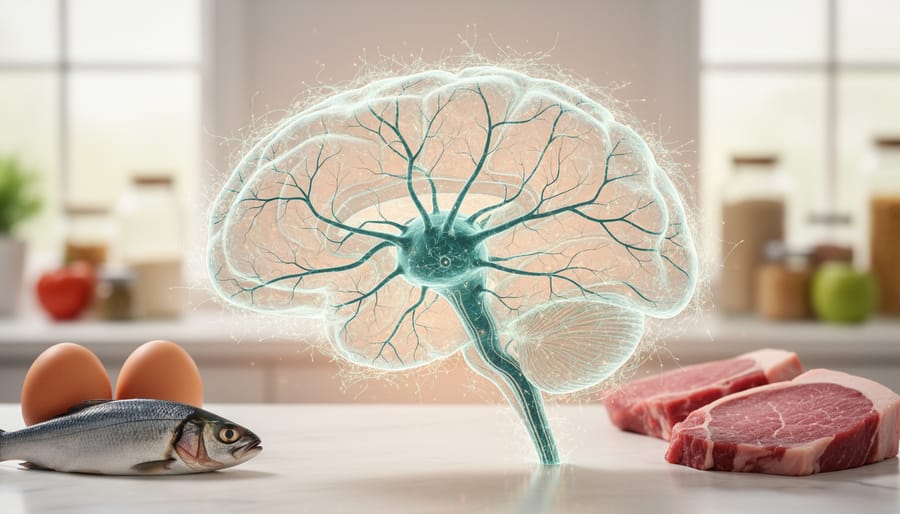
Choline early neurodevelopment research examines how this essential nutrient influences brain architecture, neural connectivity, and cognitive function during pregnancy and the first years of life. Choline is a vitamin-like compound found in foods like eggs, meat, and fish that serves as a building block for acetylcholine, a neurotransmitter critical for memory and learning, and phospholipids that form cell membranes throughout the developing brain.
The stakes of this research are substantial. The brain undergoes its most rapid growth between conception and age three, establishing neural circuits that shape lifelong cognitive abilities, emotional regulation, and behavior. During this window, choline supports cell division, myelination (the insulation coating that speeds neural signals), and the formation of the hippocampus, the brain’s memory center. When pregnant mothers or young children don’t get adequate choline, research suggests lasting effects on attention, processing speed, and even susceptibility to neurodevelopmental disorders.
Over the past two decades, scientists have used animal models, human observational studies, and clinical trials to map precisely how choline timing and dosage affect specific brain regions and functions. These findings have direct relevance for families navigating ADHD, autism spectrum disorder, and learning differences. Some studies show that supplementation during critical periods may offer protective effects, though the evidence continues to evolve.
This article breaks down what researchers have discovered about choline’s role in brain development, the mechanisms driving these effects, different approaches scientists use to study this relationship, and what current findings mean for children with neurodevelopmental conditions. Understanding choline bitartrate benefits and other supplementation forms can help parents and healthcare providers make informed decisions about supporting optimal brain development through evidence-based nutrition strategies.
What Choline Means for Brain Development
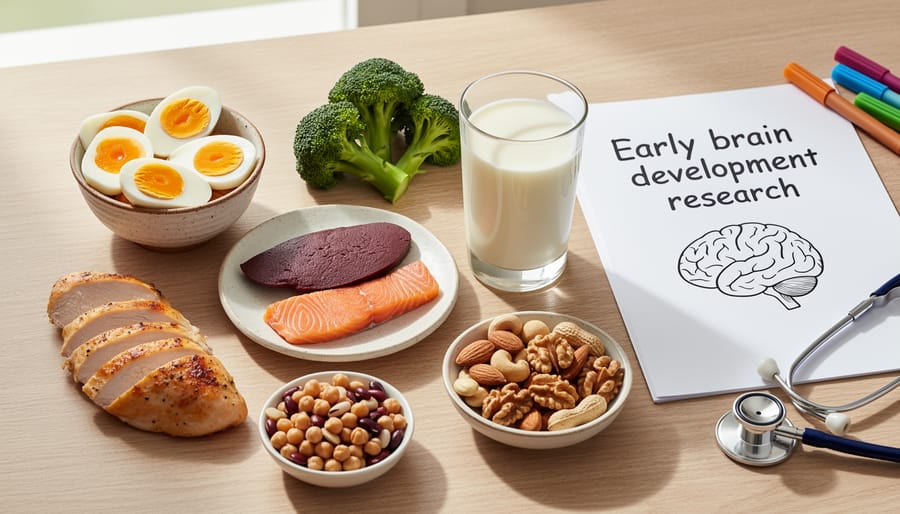
Choline is a vitamin-like compound your body needs but can’t produce in sufficient amounts on its own. You get it primarily through food, eggs, meat, fish, dairy products, certain beans, and cruciferous vegetables like broccoli all contain meaningful amounts. Choline is an essential nutrient which means humans must obtain it through diet to maintain health, much like we need vitamin C or iron.
For developing children, choline plays an outsized role. Early neurodevelopment research examines how this nutrient influences brain growth and function during the periods when a child’s nervous system is forming most rapidly. Scientists focus particularly on pregnancy and the first few years of life because these windows represent extraordinary growth, a baby’s brain roughly triples in size during the first year alone, with billions of neural connections forming every day.
- Choline
- A nutrient found in common foods that the body uses to build cell structures and produce chemical messengers in the brain.
- Neurodevelopment
- The process by which the brain and nervous system grow, form connections, and develop the abilities that support thinking, learning, and behavior.
- Critical periods
- Specific time windows, particularly during pregnancy and early childhood, when the developing brain is especially sensitive to nutritional and environmental influences.
- Essential nutrient
- A substance the body needs to function properly but cannot make in adequate amounts, requiring intake through food or supplements.
Research in this field asks fundamental questions: Does maternal choline intake during pregnancy affect how a baby’s brain develops? Can choline influence a child’s memory systems, attention span, or learning capacity? Might differences in choline availability contribute to neurodevelopmental disorders?
Prenatal choline critical periods have drawn particular attention because the fetal brain develops at an astonishing pace, requiring massive amounts of structural building blocks and signaling molecules. What a mother eats doesn’t just nourish her, it directly supplies the raw materials her baby’s developing nervous system uses to construct itself.
The research spans multiple approaches. Some studies track pregnant women’s diets and later assess their children’s cognitive development. Others examine what happens when expecting mothers receive choline supplementation. Laboratory investigations explore the biological mechanisms at work, while genetic studies investigate whether some children might need more choline than others based on their individual makeup. This multidisciplinary perspective recognizes that neurodevelopment involves complex interactions between nutrition, genetics, and environment, no single factor tells the whole story.
How Choline Supports Early Brain Development
The Pregnancy Window

During pregnancy, the developing brain undergoes explosive growth, creating billions of neurons and trillions of connections. Choline plays a particularly critical role during this prenatal window because the fetus depends entirely on maternal choline supplies crossing through the placenta.
In the second and third trimesters, when the fetal brain develops at its fastest pace, choline demand increases substantially. The nutrient supports several essential processes happening simultaneously. It helps build the structural framework of brain cells, forming the phospholipids that make up cell membranes throughout the growing nervous system. Without adequate choline, these membranes can’t form properly, potentially affecting how brain cells communicate.
Choline also influences which genes get activated during brain development through a process called methylation. This matters because early gene expression patterns can affect brain structure for life. Research suggests that higher maternal choline intake during pregnancy may enhance the development of the hippocampus, the brain region responsible for memory and learning, and improve the precision of neural connections.
The placenta actually concentrates choline from maternal blood, delivering it to the fetus at levels several times higher than what’s in the mother’s circulation. This biological priority system shows how essential the nutrient is during this critical window, though many pregnant women still consume less than recommended amounts.
Early Childhood Development

After birth, the brain’s growth spurt continues through the first years of life, and choline remains essential throughout this critical window. During infancy and toddlerhood, the brain is forming and refining the neural connections that underpin learning, memory, and attention. Choline supports this process by helping build the structural components of brain cells and enabling the chemical signaling systems that allow neurons to communicate effectively.
Memory formation particularly depends on adequate choline availability. The hippocampus, the brain region central to learning and memory, develops rapidly during early childhood and requires substantial amounts of choline to produce acetylcholine, the neurotransmitter that facilitates memory encoding and retrieval. Research has shown that children with higher choline intake during this period often demonstrate better performance on memory tasks and learning assessments.
Attention and focus systems also rely on choline during their development. The prefrontal cortex, which governs attention, impulse control, and executive function, undergoes significant maturation in early childhood. Choline supports the development of neurotransmitter systems in this region, helping establish the neural foundations for sustained attention and behavioral regulation.
The developing brain’s choline needs during infancy are typically met through breast milk or fortified formula, but as children transition to solid foods, dietary intake becomes increasingly important. Parents and healthcare providers recognize that meeting these nutritional needs during the toddler years supports the ongoing development of cognitive abilities that children will rely on throughout their lives.
Different Types of Choline Research in Neurodevelopment
Clinical Studies with Families
Clinical studies with families form the foundation of what we know about choline and child development. Researchers typically recruit pregnant women early in pregnancy, measure their choline intake through dietary questionnaires and blood tests, then follow their children over months or years to track cognitive, language, and behavioral outcomes. These longitudinal studies have revealed that higher maternal choline intake during the second and third trimesters often correlates with better memory performance, attention span, and processing speed in children tested at ages ranging from infancy through school age.
Some research designs compare women receiving standard prenatal care to those given choline supplements above typical intake levels, measuring whether the extra choline produces measurable differences in children’s brain development. Other studies examine families with genetic variations affecting choline metabolism, exploring whether certain children benefit more from higher intake. Twin studies provide particularly valuable insights by comparing outcomes between siblings who shared the same prenatal environment, helping researchers separate choline’s effects from other family factors.
These family-based studies face challenges, accurately measuring what pregnant women eat over months is difficult, children develop at varied rates, and many factors beyond choline influence outcomes. Despite these limitations, patterns consistently emerge connecting adequate maternal choline with better neurodevelopmental trajectories, providing the evidence base that informs clinical recommendations for pregnancy nutrition.
Laboratory and Animal Research
Laboratory studies using animal models, particularly rodents, provide crucial insights into how choline affects developing brains in ways that simply aren’t possible to study in human children. Scientists can precisely control choline levels, examine brain tissue at different developmental stages, and investigate specific biological pathways without the ethical constraints of human research.
These controlled experiments have revealed exactly how choline supports myelin formation, the insulation around nerve fibers that speeds up brain signaling. Researchers can track how maternal choline intake during pregnancy affects offspring’s hippocampus structure, the brain region critical for memory. Animal studies have also demonstrated that choline deficiency during critical windows leads to permanent changes in brain architecture, while adequate or supplemented choline enhances cognitive performance in offspring.
This laboratory work establishes cause-and-effect relationships between choline and brain development, providing the mechanistic foundation that helps interpret human observational studies and guides clinical recommendations for pregnant women and young children.
Genomic and Personalized Approaches
Scientists are discovering that not everyone needs the same amount of choline for optimal brain development. Genetic variations can affect how efficiently your body processes and uses this nutrient, meaning identical dietary intake might produce different outcomes in different children.
This genomics approach examines specific genes involved in choline metabolism, including those that control how choline moves into cells and how it gets converted into the compounds the brain needs. Some people carry gene variants that make them less efficient at using choline, potentially increasing their requirements during pregnancy and early childhood.
Research teams are working to identify which genetic profiles might benefit from higher choline intake or earlier intervention. This personalized perspective aligns with broader efforts to customize neurodevelopmental treatments based on individual biology rather than applying one-size-fits-all recommendations. While this research is still emerging, it represents a shift toward understanding why some children might be more vulnerable to low choline levels and how families might one day receive tailored guidance based on their child’s genetic makeup.
How Choline Research Applies to Neurodevelopmental Disorders
Links to Autism and Social Communication
Several research teams have investigated whether choline intake during pregnancy influences autism risk and the development of social communication skills in children. Animal studies have shown that prenatal choline supplementation can alter brain development in regions associated with social behavior and sensory processing, both relevant to autism spectrum disorder. Human observational studies have found associations between maternal choline intake and children’s social responsiveness scores, though these relationships are complex and influenced by multiple factors including genetics and overall maternal nutrition.
Recent intervention trials have begun examining whether maternal choline supplementation during pregnancy might benefit children at higher genetic risk for autism. Early findings suggest potential improvements in attention and information processing, skills that often challenge children on the spectrum. However, researchers emphasize that choline is not a singular cause or cure for autism, rather, it represents one modifiable factor that may interact with genetic predispositions and environmental influences to affect neurodevelopmental pathways.
This work connects directly to broader autism research examining how prenatal and early-life factors shape brain development. The multidisciplinary approach combining nutritional science, genetics, and developmental neuroscience helps identify which children might benefit most from optimized choline intake, moving toward personalized prevention and support strategies rather than one-size-fits-all recommendations.
Attention, Memory, and ADHD
Researchers have found several important connections between choline and the brain systems responsible for attention, memory formation, and executive function, the same systems that work differently in children with ADHD. Because choline helps produce acetylcholine, a neurotransmitter essential for focus and learning, adequate choline during early development appears to strengthen these neural pathways.
Studies tracking children whose mothers had higher choline intake during pregnancy show better sustained attention and fewer impulsive behaviors in early childhood. One research team found that children of mothers who consumed adequate choline performed significantly better on memory tasks requiring concentration and were less likely to show attention difficulties by age seven.
The mechanism makes biological sense: acetylcholine regulates attention switching, helps form new memories, and supports the prefrontal cortex functions that manage impulses and planning. When developing brains receive sufficient choline, these systems may build stronger foundations.
For children with ADHD, some preliminary research suggests choline supplementation might support existing treatments, though evidence remains limited. The connection between early choline exposure and later attention function has prompted scientists to explore whether optimizing maternal intake could reduce ADHD risk in vulnerable populations, particularly when combined with genomic screening to identify children who metabolize choline differently.
Broader Cognitive Development
Research examining choline’s role in cognitive development extends beyond specific diagnoses to illuminate how this nutrient supports the foundational brain processes underlying all learning and thinking. Studies tracking children from infancy through early school years show that higher maternal choline intake during pregnancy correlates with better performance on memory tasks, processing speed, and general intelligence measures. These findings suggest choline contributes to the basic neural infrastructure, efficient neurotransmitter systems, robust brain cell membranes, and properly regulated gene expression, that supports cognitive function regardless of diagnostic category.
This broader perspective matters particularly for children who experience intellectual disability or developmental delays without a clear genetic cause. Understanding how nutritional factors like choline influence the developing brain helps researchers and clinicians move toward more comprehensive care systems that address multiple contributing factors rather than focusing narrowly on single causes. Current research explores whether optimizing choline intake during critical developmental windows might improve cognitive trajectories for at-risk populations, including premature infants and children from disadvantaged backgrounds where both nutritional deficits and environmental stressors can affect brain development. While not a standalone solution, choline represents one evidence-based component in the multidisciplinary approach to supporting every child’s cognitive potential.
Current Research Directions and What They Mean for Families
In 2026, choline and neurodevelopment research is moving rapidly toward practical, personalized approaches that could benefit your family. Researchers are no longer asking just whether choline matters, but when it matters most, how much individual children need, and which populations benefit most from targeted interventions.
The most exciting developments focus on identifying critical windows of opportunity. Scientists are pinpointing specific prenatal and early childhood periods when the developing brain shows heightened sensitivity to choline. This means recommendations may soon shift from general guidelines to trimester-specific and age-specific targets, helping parents time nutritional interventions for maximum impact on their child’s developing attention, memory, and social communication systems.
Personalized nutrition represents another major frontier. Ongoing genomic studies are revealing that genetic variations affect how efficiently children process and utilize choline. Some children may require substantially higher intake levels due to their genetic makeup. Labs across multiple disciplines are collaborating to develop practical screening tools that could identify which families might benefit most from choline supplementation, moving beyond one-size-fits-all recommendations toward truly customized strategies.
Intervention trials targeting at-risk populations are expanding significantly. Researchers are testing whether choline supplementation during pregnancy can reduce neurodevelopmental challenges in families with genetic predispositions to autism spectrum disorder, ADHD, or intellectual disability. Early results from these collaborative studies suggest promise, though scientists emphasize we’re still years away from definitive clinical protocols.
What does this mean for your family today? While personalized choline recommendations aren’t yet standard practice, the research trajectory points clearly toward more tailored guidance within the next few years. If your child has a neurodevelopmental diagnosis or you’re concerned about risk factors, discussing choline intake with your healthcare team makes sense now. They can help you understand whether current evidence supports dietary changes or supplementation for your specific situation, even as researchers work toward more precise, individualized recommendations for the future.
Research into choline and early neurodevelopment represents a rapidly evolving field that holds genuine promise for families navigating neurodevelopmental concerns. While scientists continue to uncover how this essential nutrient shapes developing brains, the evidence already points toward choline as a meaningful factor in supporting cognitive function, attention systems, and social communication pathways.
What makes this research particularly encouraging is its inherently multidisciplinary nature. Nutritionists, geneticists, neurologists, and developmental specialists are collaborating to understand not just whether choline matters, but how individual differences in genetics, diet, and environment might influence each child’s specific needs. This approach aligns perfectly with the movement toward personalized medicine, where treatments and interventions are tailored to the individual rather than applied universally.
For parents and professionals, the practical message is clear: adequate choline intake during pregnancy and early childhood appears important for optimal brain development, yet individual requirements may vary. Rather than attempting to navigate these complexities alone, families benefit most from working with healthcare teams who can assess nutritional status, consider genetic factors, and develop customized strategies that account for each child’s unique situation.
As research continues to define critical windows, identify at-risk populations, and refine recommendations, staying informed through trusted healthcare providers remains the best path forward. The science is advancing, and with it, our ability to support children’s neurodevelopmental potential from the very beginning.