
When your child’s pain persists despite trying medication after medication, therapy after therapy, the frustration can feel overwhelming. You’re not imagining it—chronic pain in children with neurodevelopmental challenges is genuinely more complex than standard approaches can address. Single-treatment methods often fall short because pain doesn’t exist in isolation; it intertwines with sensory processing, communication barriers, anxiety, sleep disruption, and how your child’s unique nervous system interprets signals.
A multidisciplinary approach recognizes what you’ve likely already discovered through experience: your child needs more than one specialist’s perspective. This coordinated model brings together physicians, physical therapists, occupational therapists, psychologists, and other experts who communicate regularly about your child’s care. Rather than attending disconnected appointments where you repeat the same story to each provider, you gain a unified team that shares observations, adjusts strategies together, and builds treatment plans addressing pain’s physical, emotional, and behavioral dimensions simultaneously.
This comprehensive method matters particularly for children with autism, ADHD, cerebral palsy, or other neurodevelopmental conditions because their pain experiences often manifest differently. What works for typically developing children may prove ineffective or even counterproductive without modifications accounting for sensory sensitivities, communication differences, or motor challenges.
Understanding how these specialists collaborate—and what each contributes to your child’s pain relief—empowers you to advocate effectively and set realistic expectations for the journey ahead. You deserve clarity about what comprehensive care truly means and how to access it.
Understanding Pain in Children with Neurodevelopmental Disorders
The Communication Challenge
Understanding your child’s pain can be particularly challenging when they have a neurodevelopmental disorder. Many children with conditions like autism, cerebral palsy, or intellectual disabilities experience difficulty communicating their discomfort through traditional means. They may not have the words to describe where it hurts, how intense the pain feels, or when it started.
Communication barriers go beyond just verbal expression. Some children may show pain differently than typically developing kids. Instead of crying or pointing to a sore spot, they might display behavioral changes such as increased irritability, withdrawal from favorite activities, sleep disruptions, or self-injurious behaviors. These non-verbal signals can be easy to misinterpret or overlook entirely.
For parents and caregivers, this creates a frustrating guessing game. You know something is wrong, but pinpointing the exact problem feels impossible. Healthcare professionals also face challenges, as standard pain assessment tools designed for verbal children often fall short. This is where a multidisciplinary approach becomes essential. By bringing together specialists who understand both pain management and neurodevelopmental differences, your child receives care from a team trained to recognize these unique communication patterns and adapt their assessment methods accordingly.
Sensory Processing and Pain Perception
Children with neurodevelopmental disorders often experience the world differently through their senses, which directly impacts how they perceive and respond to pain. These sensory processing differences mean that what might feel like minor discomfort to one child could be overwhelming to another, while some children may not recognize pain signals as quickly as expected.
For many children with conditions like autism or ADHD, heightened sensory sensitivity can amplify pain experiences. A gentle touch during a medical examination might feel intensely uncomfortable, or background noises in a doctor’s office could increase their distress and pain perception. Conversely, some children have reduced sensory awareness and may not notice injuries or communicate pain effectively, leading to delayed treatment.
Understanding these sensory differences is essential for effective pain management. Traditional pain assessment tools that rely on self-reporting may not work well for children who process sensory information differently or have communication challenges. This is why a multidisciplinary approach becomes crucial—occupational therapists can evaluate sensory processing patterns, psychologists can develop alternative communication strategies for pain reporting, and medical professionals can adjust their examination techniques accordingly. By recognizing that pain perception varies based on individual sensory profiles, care teams can create customized treatment plans that address each child’s unique needs.
What a Multidisciplinary Approach Really Means

The Core Team Members
When your child faces chronic pain alongside neurodevelopmental challenges, you need more than one specialist—you need a coordinated team working together. A multidisciplinary pain management team brings together professionals from different fields, each contributing their unique expertise to create a comprehensive treatment plan tailored specifically to your child’s needs.
At the center of this team is typically your child’s pediatrician, who serves as the primary coordinator, overseeing overall health and connecting you with specialized care. Pain specialists, often anesthesiologists or neurologists with advanced training in pain medicine, focus on understanding the biological mechanisms of your child’s pain and managing medication when necessary.
Psychologists play a crucial role in addressing how pain affects your child emotionally and teaching coping strategies to manage discomfort. They help children develop resilience and work through any anxiety or depression that chronic pain can trigger.
Physiotherapists design movement-based treatments to improve physical function, reduce pain through targeted exercises, and help your child maintain or regain mobility. Occupational therapists focus on practical daily living skills, adapting activities so your child can participate in school, play, and self-care despite pain limitations.
Depending on your child’s specific situation, the team might also include nurses who provide education and support, social workers who connect families with resources and navigate insurance challenges, and nutritionists who address how diet impacts pain and overall wellbeing.
Each professional brings valuable perspective, but the real power lies in how they communicate and collaborate, ensuring every aspect of your child’s pain experience receives attention.
How the Team Collaborates
Effective pain management requires constant communication and coordination among specialists. Think of it as a team huddle where everyone brings their unique perspective to understand your child’s complete picture.
The process typically begins with a comprehensive evaluation where each specialist examines your child from their area of expertise. A neurologist might assess nerve function, while a developmental pediatrician evaluates how neurodevelopmental factors influence pain perception. A physical therapist observes movement patterns, and a psychologist explores emotional and behavioral aspects.
These professionals then meet regularly to discuss their findings and develop a unified treatment plan. They share insights through case conferences, electronic health records, and collaborative meetings. For example, if the physical therapist notices tension patterns, the psychologist might introduce relaxation techniques while the physician adjusts medication timing to support therapy sessions.
This coordination ensures treatments complement rather than contradict each other. Your child isn’t receiving disconnected care from separate doctors; instead, every intervention is carefully designed to work together. The team continuously monitors progress and adjusts the plan based on what’s working and what needs refinement.
You remain at the center of this collaboration. The team values your observations about what helps your child and incorporates your feedback into treatment adjustments, creating truly customized care.
The Building Blocks of Multidisciplinary Pain Management
Medical and Physical Interventions
Medical and physical interventions form the foundation of many pain management plans, but for children with neurodevelopmental disorders, these approaches require special consideration and customization.
Medication management goes far beyond simply prescribing pain relievers. Your child’s physician will carefully evaluate which medications might work best based on the type of pain, its severity, and how it interacts with any existing medications your child takes. This might include over-the-counter options, prescription pain medications, or medications that address underlying causes like muscle tension or nerve sensitivity. The goal is always to use the lowest effective dose while monitoring for side effects, especially since children with neurodevelopmental differences may respond differently to medications than typically developing children.
Physical therapy plays a vital role in helping children build strength, improve mobility, and reduce pain through movement. A pediatric physical therapist will design exercises and activities specifically for your child’s abilities and challenges. This might include gentle stretching, strengthening exercises, or learning new ways to move that put less strain on painful areas. The therapist works at your child’s pace, making adjustments as needed and often incorporating play-based activities to keep sessions engaging.
Other medical interventions might include occupational therapy to address how pain affects daily activities, or specialized treatments like heat therapy, cold therapy, or transcutaneous electrical nerve stimulation (TENS), which uses mild electrical currents to reduce pain signals. Each intervention is carefully selected and adjusted based on your child’s specific needs, responses, and comfort level, ensuring the approach truly fits your family’s situation.
Psychological and Behavioral Strategies
The mind and body connection plays a powerful role in how children experience and manage pain, especially those with neurodevelopmental differences. Psychological and behavioral strategies form an essential part of comprehensive pain management, helping children develop healthy coping mechanisms and emotional resilience.
Cognitive-behavioral therapy (CBT), adapted specifically for children with neurodevelopmental conditions, teaches practical skills to manage pain responses. This approach helps children recognize the connection between their thoughts, feelings, and physical sensations. For example, a child might learn that catastrophic thinking (“This pain will never end”) can actually intensify their discomfort, while more balanced thoughts can ease their experience.
Coping skills training provides children with concrete tools they can use when pain strikes. These might include deep breathing exercises, progressive muscle relaxation, or visualization techniques. For children with autism or ADHD, these strategies are modified to match their learning style and sensory preferences. A visual learner might benefit from picture cards showing each relaxation step, while a child with sensory sensitivities might prefer certain calming activities over others.
Emotional support remains crucial throughout this process. Psychologists and counselors work closely with families to address anxiety, frustration, or depression that often accompanies chronic pain. They help parents understand their child’s unique emotional needs and teach family members how to provide encouragement without reinforcing pain behaviors.
The customized nature of these approaches ensures each child receives strategies that genuinely work for their individual situation, making pain more manageable and improving overall quality of life.

Occupational and Sensory Therapies
Occupational therapists play a vital role in managing pain by helping children navigate the sensory and functional challenges that often intensify their discomfort. For children with neurodevelopmental disorders, sensory processing difficulties can make pain more intense or harder to identify and communicate. An occupational therapist (OT) carefully evaluates how your child processes sensory information—touch, movement, sound, and visual input—and how these experiences relate to their pain.
Through customized interventions, OTs work to reduce sensory overload that may trigger or worsen pain episodes. They might introduce specific activities that help your child’s nervous system better regulate responses to sensory input, making daily experiences less overwhelming. For instance, if certain textures or movements cause distress, the OT develops gradual exposure strategies that build tolerance in a safe, supportive way.
Beyond sensory concerns, occupational therapists address how pain affects your child’s ability to participate in everyday activities—getting dressed, eating meals, playing with friends, or completing schoolwork. They adapt tasks and environments to reduce pain triggers while maintaining your child’s independence and confidence. This might include recommending adaptive equipment, modifying how activities are performed, or teaching energy conservation techniques.
The OT also collaborates closely with other team members, sharing insights about how sensory challenges intersect with your child’s pain experience. This ensures everyone understands the complete picture and can adjust their approaches accordingly. By addressing both the sensory roots of pain and its impact on daily functioning, occupational therapy helps your child develop practical skills for managing discomfort while staying engaged in meaningful activities.
Family Education and Support
Parents and caregivers are essential partners in managing your child’s pain effectively. The multidisciplinary team recognizes that you know your child best and spend the most time with them, making your observations and involvement crucial to treatment success.
Your healthcare team will provide specific training to help you recognize your child’s unique pain signals. Since children with neurodevelopmental disorders may not express discomfort in typical ways, learning to identify behavioral changes, physical cues, or communication patterns that indicate pain becomes vital. This might include increased stimming behaviors, sleep disruptions, changes in eating habits, or withdrawal from preferred activities.
You’ll also receive practical strategies to implement at home between appointments. These may include simple relaxation techniques, positioning adjustments, sensory modifications to your child’s environment, or specific exercises tailored to your child’s needs and abilities. The team will ensure these strategies fit realistically into your family’s daily routine.
Don’t hesitate to ask questions or share concerns with your child’s care team. If something isn’t working at home, they can adjust the approach. Many families find keeping a simple pain journal helpful, tracking what triggers discomfort and what provides relief. This information helps the team continuously customize treatment to what works best for your child. Remember, you’re not expected to do this alone—ongoing support and guidance from the multidisciplinary team ensures you feel confident managing your child’s care.
Creating Your Child’s Customized Pain Management Plan
The Initial Assessment Process
The initial assessment brings together multiple specialists who each examine your child from their unique perspective, creating a complete picture of the pain experience. Think of it as assembling puzzle pieces—each specialist contributes vital information that helps reveal the full story.
Typically, this process begins with a pediatrician or pain specialist conducting a thorough medical history review and physical examination. They’ll ask detailed questions about when the pain started, what makes it better or worse, and how it affects daily activities like school, sleep, and play.
A neurologist may assess how your child’s nervous system processes pain signals, particularly important for children with neurodevelopmental differences who may experience sensory processing challenges. Meanwhile, a psychologist evaluates emotional factors, stress levels, and coping strategies, recognizing that pain and emotions are deeply connected.
Physical and occupational therapists observe movement patterns, posture, and how your child performs everyday tasks. They can identify if physical limitations or muscle imbalances contribute to discomfort.
What makes this approach powerful is the team collaboration. These specialists meet to share their findings, identifying connections others might miss. For example, they might discover that anxiety intensifies pain sensitivity, or that certain movements trigger symptoms. This comprehensive evaluation ensures nothing gets overlooked, creating a solid foundation for developing your child’s customized treatment plan.
Setting Realistic Goals Together
One of the most important aspects of multidisciplinary pain management is creating goals that make sense for your child and family. Rather than focusing solely on eliminating pain completely, which may not always be realistic, the team works with you to identify what matters most in your daily life.
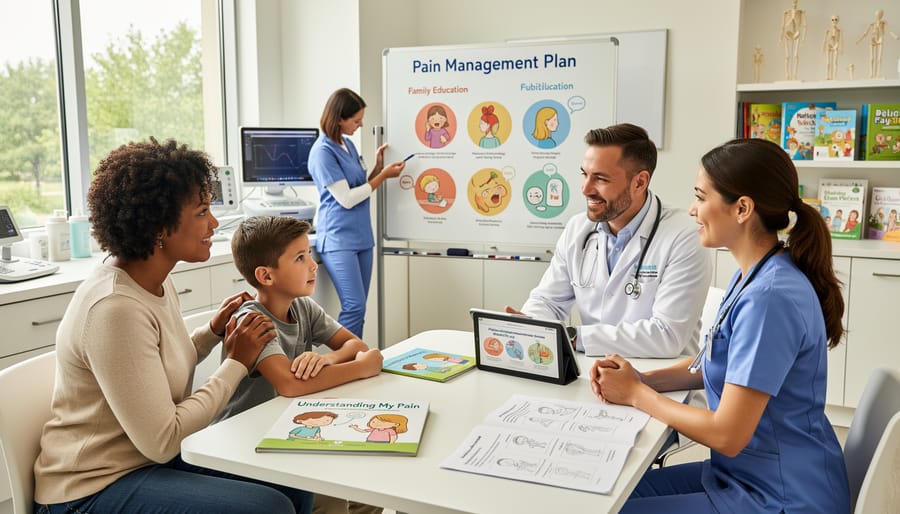
During collaborative meetings, specialists from different disciplines sit down with families to discuss what success looks like. For some children, the primary goal might be attending school more regularly. For others, it could be participating in family activities, improving sleep quality, or reducing the need for certain medications. The team considers your child’s unique neurodevelopmental profile when setting these objectives, ensuring they’re both meaningful and attainable.
This goal-setting process is dynamic and flexible. As your child progresses, the team regularly reassesses and adjusts objectives based on what’s working and what challenges remain. Perhaps your child has improved their mobility but still struggles with social activities due to pain flare-ups. The team can then shift focus accordingly.
By involving families in this process, the multidisciplinary team ensures that treatment plans reflect real-world priorities. This collaborative approach helps everyone stay motivated and focused on improvements that genuinely enhance your child’s quality of life, rather than chasing an unrealistic ideal of being completely pain-free.
Monitoring Progress and Adjusting Treatment
Pain management isn’t a one-time fix but an ongoing journey that requires regular check-ins and adjustments. Your child’s multidisciplinary team will continuously monitor how they respond to treatment, tracking both improvements and any new concerns that arise.
Expect regular follow-up appointments with different team members, who will assess pain levels, functional abilities, mood, sleep patterns, and overall quality of life. These evaluations help determine what’s working and what needs modification. For example, if physical therapy exercises are too challenging, the therapist might adjust the approach. If medication side effects emerge, the doctor can explore alternative options.
Communication between team members is essential during this process. They’ll share observations and collaborate on treatment adjustments, ensuring everyone stays aligned with your child’s evolving needs. As your child grows and develops, their pain management plan should grow with them.
Your input as a parent is invaluable here. You know your child best and notice subtle changes others might miss. Keep a simple pain diary noting triggers, patterns, and responses to treatments. Share these observations openly with the team.
Remember, finding the right combination of treatments often takes time and patience. Some approaches need weeks to show benefits, while others may need quick adjustment. This flexibility and responsiveness is what makes multidisciplinary care so effective for children with complex pain needs.
Real Benefits You Can Expect
When your child begins multidisciplinary pain management, you’ll likely notice improvements that touch many areas of their daily life. Understanding what these changes look like can help you recognize progress and stay committed to the treatment plan.
One of the first benefits many families report is better sleep quality. When specialists work together to address pain from multiple angles, children often find it easier to fall asleep and stay asleep through the night. This improvement alone can create a positive ripple effect, as better rest typically means improved mood, attention, and behavior during the day.
School participation often improves significantly. Children who previously missed classes or struggled to concentrate may find themselves more engaged in learning. The combination of pain relief strategies, coping techniques, and appropriate accommodations allows many kids to attend school more regularly and participate more fully in activities they once avoided.
Physical function typically increases as well. Your child might start enjoying activities they’d given up, whether that’s playing with friends, participating in adapted sports, or simply having the energy to join family outings. Even small gains in movement and independence can boost their confidence and overall quality of life.
Emotional well-being often shows marked improvement too. As pain becomes more manageable, children frequently experience less anxiety and frustration. They develop better coping skills that serve them beyond pain management, helping them handle other challenges more effectively.
Family life generally improves when everyone isn’t constantly focused on managing pain crises. You may find yourselves having more normal family experiences and feeling less stressed about daily activities. Many parents report feeling more hopeful and empowered once they see their child making progress with a coordinated team approach that addresses their unique needs comprehensively.
Taking the First Step: What Parents Should Do Now
If your child is struggling with chronic pain and current treatments aren’t providing relief, taking the first step toward multidisciplinary care can feel overwhelming, but you don’t have to navigate it alone.
Start by scheduling a conversation with your child’s primary care provider or pediatrician. Come prepared with specific questions: “Can you refer us to a pain management specialist who works with a multidisciplinary team?” and “Which specialists would benefit my child’s specific situation?” Don’t hesitate to ask about their experience treating children with neurodevelopmental disorders alongside chronic pain, as this combination requires specialized understanding.
Document your child’s pain patterns before appointments. Note when pain occurs, what activities trigger or relieve it, and how it affects daily functioning. This information helps specialists understand the full picture and design customized treatments.
When meeting with specialists, advocate clearly for comprehensive care. Ask how team members communicate with each other and how often they’ll review your child’s progress together. Request a coordinated treatment plan that addresses physical, emotional, and developmental needs rather than isolated symptoms.
If your insurance requires authorization for multiple specialists, work with your pediatrician’s office to submit documentation explaining why multidisciplinary care is medically necessary. Many offices have patient advocates who can help navigate approval processes.
Remember, you know your child best. If something doesn’t feel right or a provider dismisses your concerns, seek second opinions. Finding the right team may take time, but comprehensive, coordinated care significantly improves outcomes for children experiencing complex pain conditions.
Managing pain in children with neurodevelopmental disorders is undoubtedly challenging, but you don’t have to navigate this journey alone. The key to success lies in bringing together a team of specialists who understand both your child’s neurological differences and their pain experience. When pediatricians, neurologists, pain specialists, therapists, and behavioral health professionals work in coordination, they can create a treatment plan tailored specifically to your child’s unique needs.
Remember that pain management is rarely a one-size-fits-all solution. What works for one child may not work for another, and that’s exactly why a multidisciplinary approach is so valuable. Each specialist brings different perspectives and tools to address various aspects of your child’s pain, from physical symptoms to emotional responses and communication barriers.
If your child is struggling with chronic pain, don’t hesitate to ask your primary care provider about accessing comprehensive, team-based care. Many children’s hospitals and specialized clinics offer multidisciplinary pain programs designed specifically for children with complex needs. Better pain management is not just possible—it’s achievable when the right team works together with you and your family at the center of care.